MENU
TH EN

A04. Siddhartha Gautama

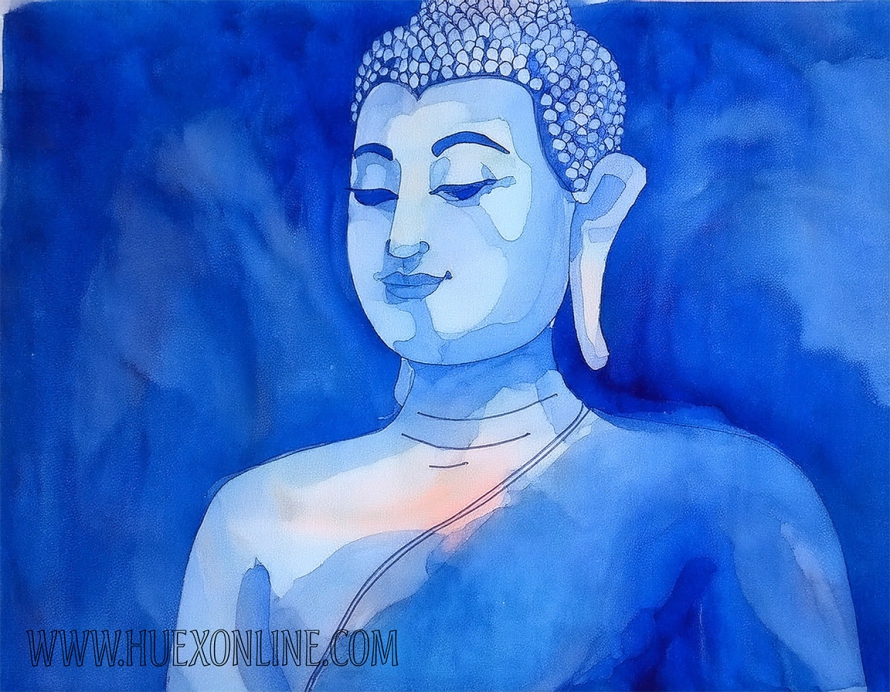
Title Thumbnail & Hero Image: Lord Buddha, developed on Feb.26, 2025.
A04. Siddhartha Gautama
First revision: Feb.26, 2025
Last change: Mar.14, 2026
Searched, gathered, rearranged, translated, and compiled by
Apirak Kanchanakongkha.

Page 1
 
Happy is he who has overcome his ego
Siddhartha Gautama
(c.563-483 BCE.01) or (543-463 BCE.02)
1.
 Philosophy  Eastern Philosophy - Sometimes, defining Buddhism as a philosophy is incorrect. On the contrary, the word philosophy may only partially explain Buddhism.
 Approach  Buddhism
 Before  - The Vedic religion reached the Indian subcontinent around 1,000 years before the Buddha or around 1,500 years before Christ.
  - Around 500 - during the Buddhist era or around the 10th-5th century before Christ, Brahmanism-Hinduism replaced or supplemented the Vedic religion.
 After  - Around the 2nd century B.E. or 3rd century B.C., Buddhism spread to the west of the Ganges River basin and throughout Bhāratavarṣa (भारतवर्ष).
 - Around 500-600 B.E. or 1st century before Christ, the teachings of the Lord Buddha were recorded as the first Tripitaka.
 - Buddhism spread to China and Southeast Asia around the 5th-6th Buddhist century or the 1st Christian century. There was a philosophical division into many sects, connected in different areas.
1.

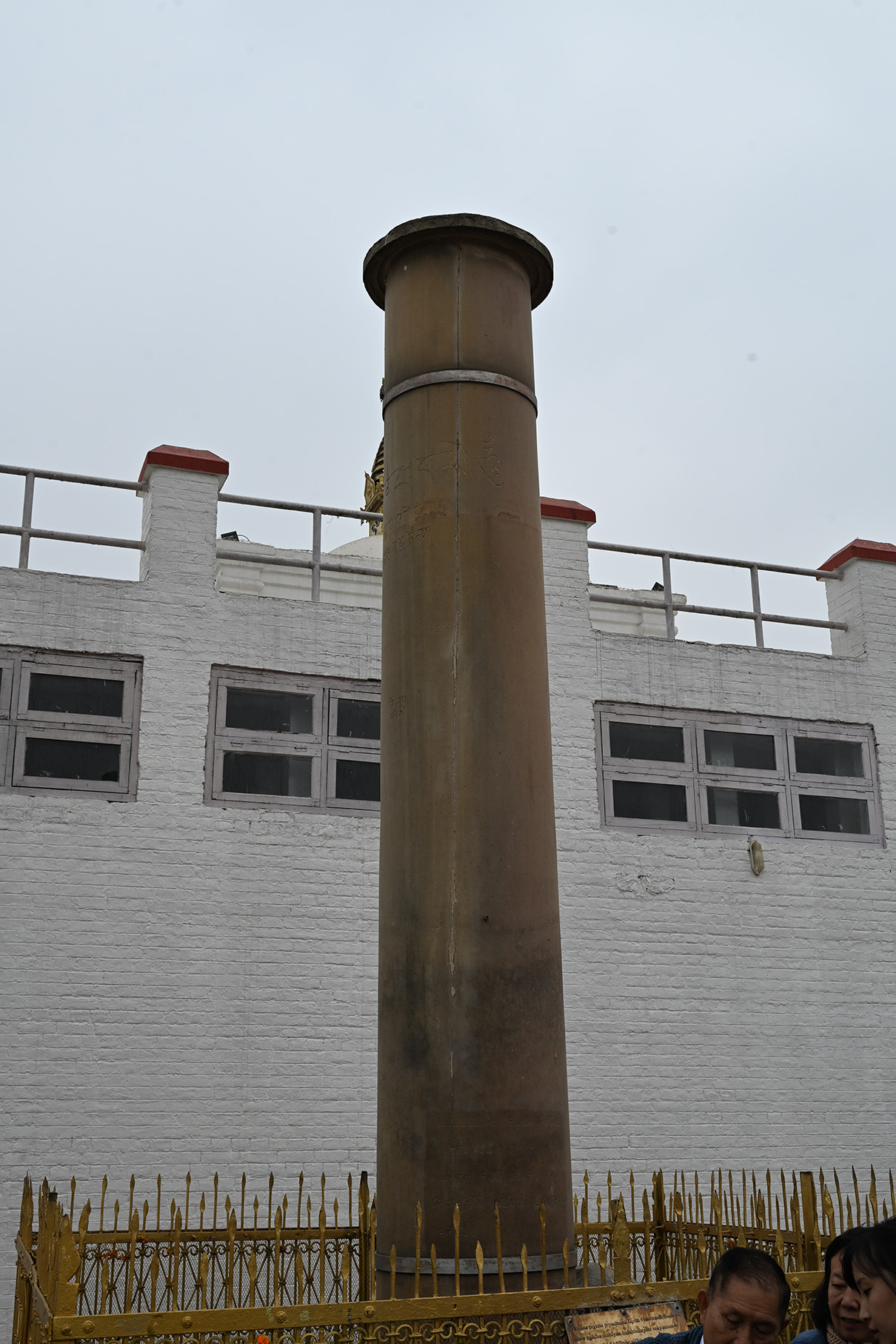
Mahāmāyā Devi Vihārn, the birthplace of Lord Buddha, with the Aśoka Pillar in front. Photographed on January 2, 2025, at Lumbini Vana, Nepal.
1.      
Notes & Narratives:
01. Use the main table of contents structure. The Philosophy Book, ISBN: 978-1-4053-5329-8, co-authored by Will Buckingham, John Marenbon, Douglas Burnham, Marcus Weeks, Clive Hill, Peter J. King, and many others, DK Publishing, published. As of 2011, Slovakia.
02. from. Vincent Smith, "Journal of the Royal Asiatic Society," 1918, p.5

1.
2.

       Siddhartha Gautama, later known as the Buddha, “the enlightened one,” lived in Bhāratavarṣa (भारतवर्ष)  when religious and mythological accounts of the world were being questioned. In Greece, thinkers such as Pythagoras examined the cosmos using reason, and in China, Laozi and Confucius detached ethics from religious dogma. Brahmanism, a religion that had evolved from Vedism – an ancient belief based on the sacred Veda texts – was the dominant faith in the Indian subcontinent in the 6th century BCE, and Siddhartha Gautama was the first to challenge its teachings with philosophical reasoning.
1.

2.
Page 2

The Four Noble Truths
 
  Suffering is an inherent part of existence from birth, sickness, and old age to death.  ===>
        
  The truth of suffering (Dukkha)
  The cause of suffering is desire: craving for sensual pleasures and attachment to worldly possessions and power.   ===>   The truth of the origin of suffering (Samudaya)
  Suffering can be ended by detaching oneself from craving and attachment.  ===>   The truth of the ending of suffering (Nirodha)
  The Eightfold Path is the means to eliminate desire and overcome the ego.  ===>   The truth of the path to the ending of suffering (Magga)
1.
       Although revered by Buddhists for his wisdom, Gautama was neither a messiah nor a prophet, and he did not act as a medium between God and Man. His ideas were arrived at through reasoning, not divine revelation, marking Buddhism as a philosophy as much as (perhaps even more than) a religion. His quest was philosophical – to discover truths – and he maintained that his proposed truths are available to all through the power of reason. Like most Eastern philosophers, he was not interested in the unanswerable questions of metaphysics that preoccupied the Greeks. Dealing with entities beyond our experience, this inquiry was senseless speculation. Instead, he concerned himself with the goal of life, which in turn involved examining the concepts of happiness, virtue, and the “good” life.
 
Siddhartha Gautama
       Almost all we know of Siddhartha Gautama’s life comes from biographies written by his followers centuries after his death, which differ widely in many details. What is certain is that he was born in Lumbini, modern-day Nepal, sometime around 560 BCE. His father was an official, possibly the clan leader, and Siddhartha led a privileged life of luxury and high status.
Dissatisfied with this, Siddhartha left his wife and son to find a spiritual path and discovered the “middle way” between sensual indulgence and asceticism. He experienced enlightenment while thinking in the shade of a Bodhi tree and devoted the rest of his life to travelling throughout India, preaching. After his death, his teachings were passed down orally for some 400 years before being written down in the Tipitaka (Three Baskets).

Key works
1st century CE
Tipitaka (recounted by his followers), comprising Vinaya-pitaka. Sutta-pitaka, Abhidhamma-pitaka.
 
The middle way
         In his early life, Gautama enjoyed luxury and, we are told, all the sensual pleasures. However, he realized these were not enough to bring him true happiness. He was aware of the suffering in the world and saw that it was mainly due to sickness, old age, death, and people's lack of what they needed.
1.
2.
Page 3
He also recognized that the sensual pleasure we indulge in to relieve suffering is rarely satisfying and that when it is, the effects are transitory. He found the experience of extreme asceticism (austerity and abstinence) equally dissatisfying, bringing him no nearer to an understanding of how to achieve happiness.
 
         Gautama concluded that there must be a “middle way” between self-indulgence and self-mortification. This middle way, he believed, should lead to true happiness, or “enlightenment,” and to find it he applied reason to his own experiences.
 
         Suffering, he realized, is universal. It is an integral part of existence, and the root cause of our suffering is the frustration of our desires and expectations. These desires he calls “attachments,” and they include not only our sensual desires and worldly ambitions, but our most basic instinct for self-preservation. Satisfying these attachments, he argues, may bring short-term gratification, but not happiness in the sense of contentment and peace of mind.
 

The “not-self”
The next step in Gautama’s reasoning is that the elimination of attachments will prevent any disappointment and so avoid suffering. To achieve this, he suggests a root cause of our attachments – our selfishness, and by selfishness he means more than just our tendency to seek gratification. For Gautama, selfishness is self-centeredness and self-attachments – the domain of what today we would call the “ego.” So, to free ourselves from attachments that cause us pain, it is not enough merely to renounce the things we desire – we must overcome our attachment to those which desires – the “self.”
 
         But how can this be done? Desire, ambition, and expectation are part of our nature, and for most of us constitute our very reasons for living. The answer, for Gautama, is that the ego’s world is illusory – as he shows, again, by a process of reasoning. He argues that nothing in the universe is self-caused, for everything is the result of some previous action, and each of us is only a transitory part of the eternal process – ultimately impermanent and without substance. So, there is no “self” that is not part of the greater whole – or the “not-self” – and suffering results from our failure to recognize this. This does not mean that we should deny our existence or personal identity, rather that we should understand them for what they are – transient and insubstantial. Grasping the concept of being a constituent part of an eternal “not-self,” rather than clinging to the notion of being a unique “self,” is the key to losing that attachment, and finding a release from suffering.
 

The Eightfold Path
Gautama’s reasoning from the causes of suffering too the way to achieve happiness is codified in Buddhist teachings in the Four Noble Truths: that desire is the cause of suffering; that suffering can be avoided by eliminating desire; that following the Eightfold Path will eliminate desire. This last Truth refers to what amounts to a practical guide to the “middle way” that Gautama laid out for his followers to achieve enlightenment.


1.
2.
3.

 
humanexcellence.thailand@gmail.com