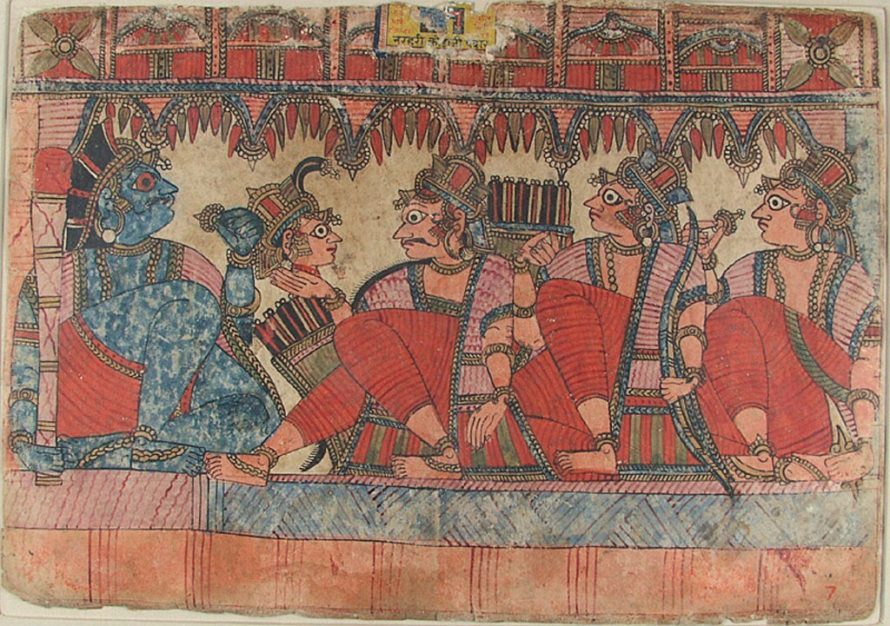
Assembly of Warriors, the Āśvamedha, source: Harvard Art Museum, www.theindiaforum.in, access date: Jan.31, 2023
A04. Introduction: Dharma, Heroes and Villains
First revision: Jan.31, 2023
Last change: Dec.3, 2025
Searched, gathered, rearranged, translated, and compiled by Apirak Kanchanakongkha.
1.
Explanation: To ensure completeness in this study, references to the content of the Mahabharata must be included. Therefore, the identification of chapters, verses, and verses is as follows:
For example, (3, 198) refers to Chapter 3, verse 198.
(7, 23-25) refers to Chapter 7, verses 23-25.
(11, 15, 1-8) refers to Chapter 11, verse 15, verses 1-8, etc.
1.
2.
Page 1
Dharma
1.
The Mahābhārata is about a conflict between two families that led to the 18-day war and its long-lasting consequences. If we look at it more deeply, many people can answer that it is about "Dharma".
Dharma is not a concept that can be directly or even approximately defined by any English term. Words like "law," "duty," "morality," "ethics," and even "the things in life" all come close to defining it, but none of them come close enough. One person's Dharma is different from another person's Dharma. Having sex may be wrong for you, but right for me. Practicing asceticism in the forest may be right for you, but wrong for me. Many factors come together to determine what is Dharma for a person.
It begins with the class of study to which each individual belongs. This is important, above all, because Dharma is defined in a social sense.
1.
2.
Page 2
Brahmins should study the sacred Vedas, but it would be a grave mistake if the Sudras (शूद्र - Śūdra) studied the Vedas, they would immediately become "adharma (अधर्म or अधर्मः)". The Kṣatriya dharma (क्षत्रियम् - Kṣatriya dharma) consisted of fighting, ruling and punishing the wrongdoers. The Vaiśya dharma (वैश्य - Vaiśya) did not include any of the above, but only practiced such that one could hope to improve one's status in the next rebirth. In the Mahābhārata (3, 198-206), the Brahmin Kauśika receives Dharma instruction from a wise hunter of lower status. The hunter is now slaughtering animals due to sins in a previous life. Kauśika rebukes the hunter for his 'horrible work', but the hunter replies that it is his Dharma and that only by practicing it correctly can, he hopes to improve himself in his next life. (By practicing it correctly according to the hunter's caste in this life, he will be reborn in a higher realm or caste in his next life.)
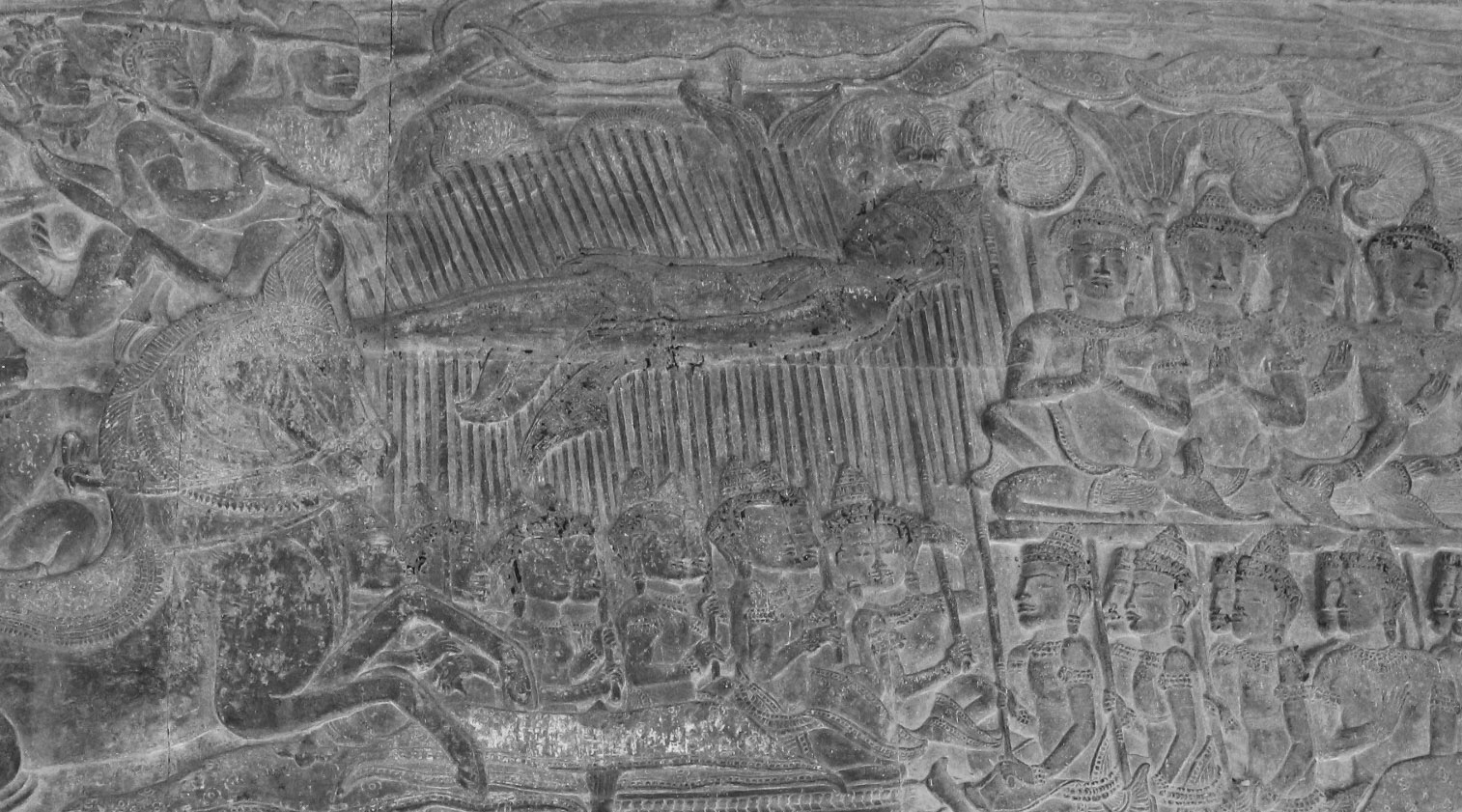 Elder statesman Bhīṣhma Lying down, praying to God, body not touching the floor. Because an arrow supported it. Picture from the southwest corner pavilion, Angkor Wat, Siem Reap, Cambodia, taken on October 20, 2018.
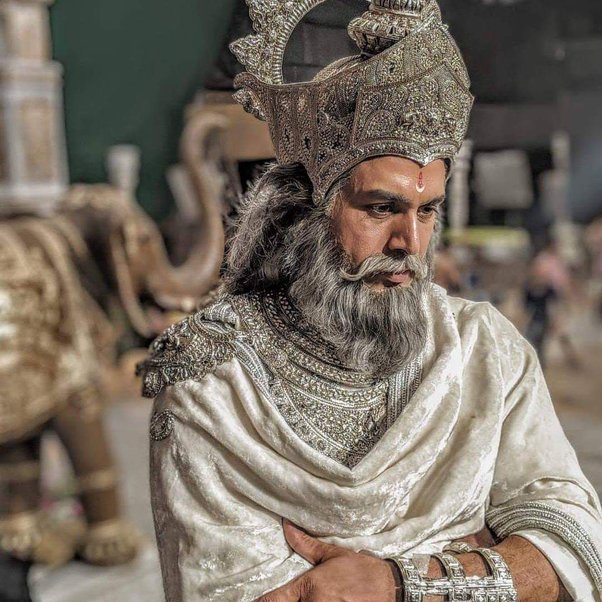 Bhīṣma, Pitāmaha, Gangaputra, or Devavrata, source: www.quora.com, access date: Aug.05, 2022.
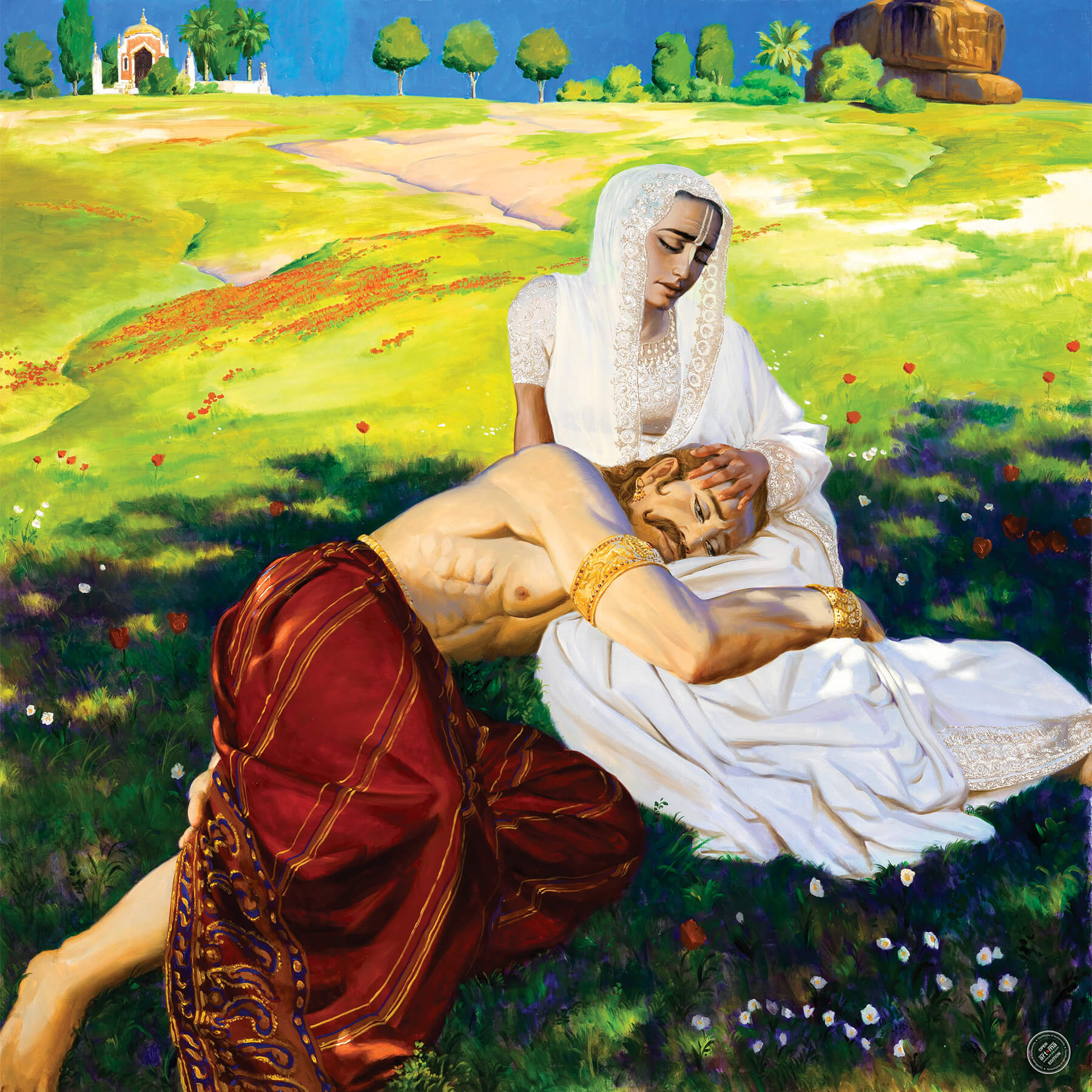
Karṇa and Kunti (when Mother Kunti reveals to Karṇa that he is her first son and, therefore, the eldest of the Pandava brothers), source: www.art-ma.com, access date: Nov.09, 2022.
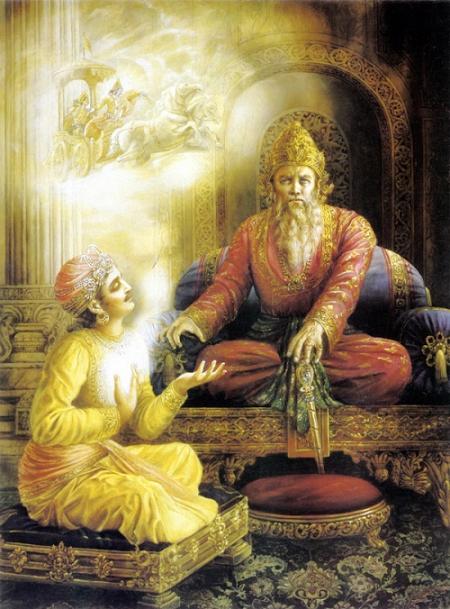 King Dhṛtarāṣṭra listening to Sanjay narrating the events of the war, source: www.bloggang.com, access date: Aug.8, 2022
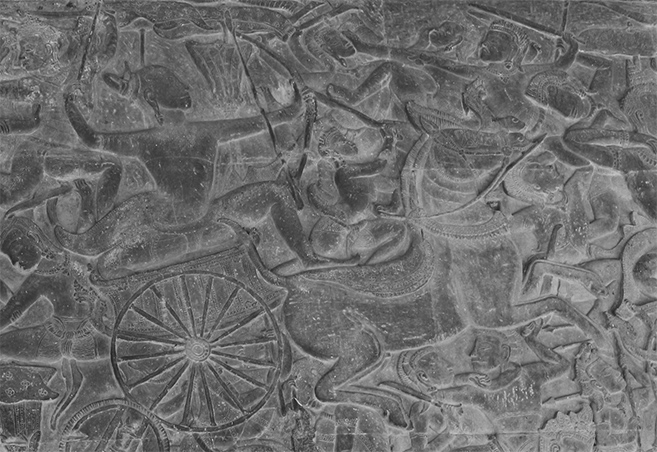 Bas relief of Droṇa, Picture from the southwest corner pavilion, Angkor Wat, Siem Reap, Cambodia, taken on October 16, 2017.
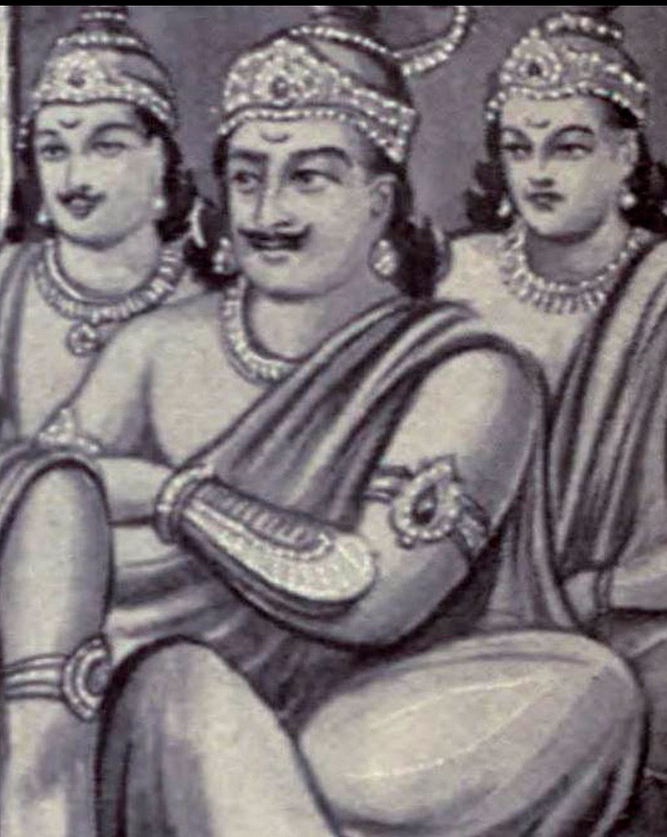 This is a picture showing three important people of the Kauravas: Duryodhana (center), Duḥśāsana (left), and Vikarṇa (right). The source is en.wikipedia.org, and the access date is October 30, 2023.
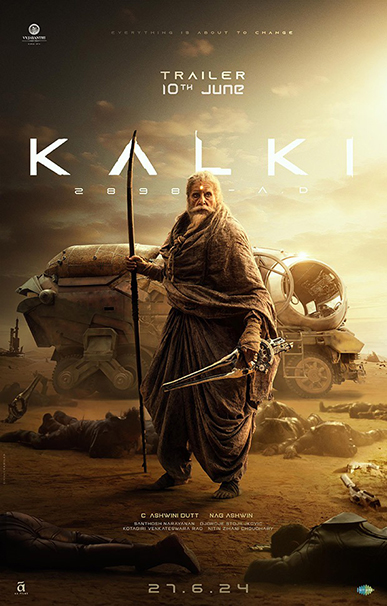 Actor Amitabh Bachchan as Aśvatthāman in Bollywood Movies "Kalki - 2898 A.D.", source: www.bollywoodhungama.com, access date: Oct.4, 2024.
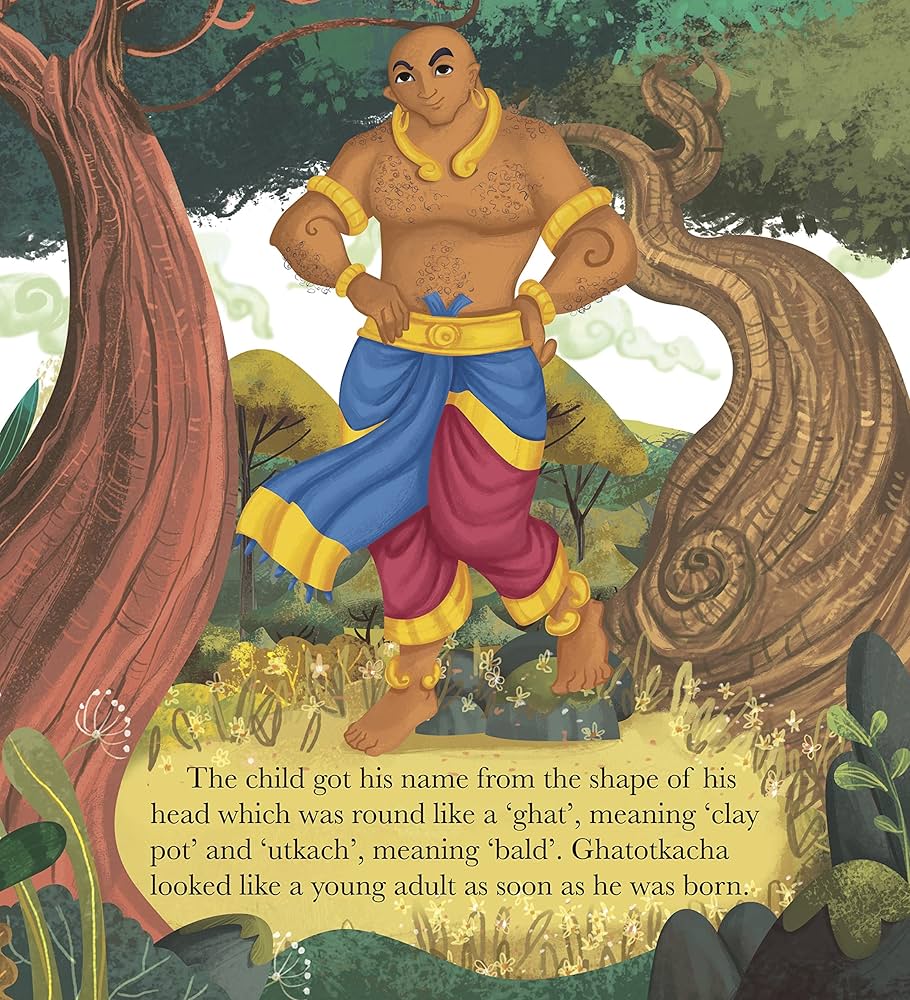 Ghaṭotkaca (घटोत्कच), source: www.amazon.com, access date: Nov.2, 2025.
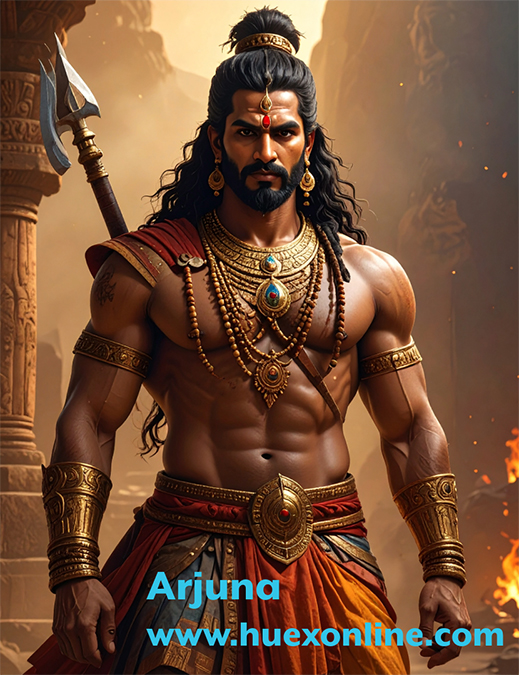
Arjuna, developed on November 27, 2025.
01. The Bhagavad Gītā (भगवद्गीता) is a poem consisting of 650 verses divided into eighteen chapters. The Gītā covers chapters 25-45 of the Bhīṣma Parva of the Mahābhārata and is presented as a dialogue between Arjuna and Lord Kṛṣṇa. The mighty armies of the Pāṇḍavas and the Kauravas were arrayed on opposite sides for mortal combat on the field of Kurukṣetra when Arjuna, overcome by grief at the prospect of fathers, brothers, preceptors, and other Kinsmen fighting and killing one another, expressed to his charioteer, Śrī Kṛṣṇa, his aversion to fighting. But, the Lord pointed out to the unwilling Arjuna, by unique and various arguments, his imperative duty, under the circumstances, to fight and fight in heroic earnestness, with the result that Arjuna shed his disinclination to fight and entered the fray, which ended in the ultimate victory of the Pāṇḍavas. And the dialogue between Arjuna and Kṛṣṇa, and especially the excellent teaching of Kṛṣṇa on the field, forms the theme of the Gītā. The Gītā contains three spheres or fields of teaching: the karma yoga (philosophy of action), jñāna yoga (philosophy of knowledge), and Bhaktiyoga (philosophy of devotion). The three yogas are treated each in six chapters. (See full article at Story of Bhagavat-gītā from the Puranic encyclopaedia by Vettam Mani) or see in The Bhagavad Gita.
 Yudhiṣṭhira, developed on Dec.3, 2025.
02. from. "The Mahābhārata," an abridged translation by JOHN D. SMITH, ISBN: 978-0-140-44681-4, PENGUIN BOOKS, 2009, printed in the United States of America, www.penguin.com.
03. from. "The Mahabharata: Complete 18 volumes," Veda Vyasa, Kisari Mohan Ganguli, tr. [1883-1896], Published in 2021 by Sanzani Publishing.
.
.
.